Wednesday, 1 February 2012

Chap 2: Real Numbers - Investigative Activity (I) Addition of Numbers
In this investigative activity, you are going to add integers of different combinations:
Draw up a 'rule' that would guide us when we add integers (especially when it involves negative integers).
Vocabulary List: Numerical Part. Sign. Positive. Negative. Difference. Sum. Same.
You are going to work in pairs or threes.
1. One of you will download the file "Chapter 2 Investigative Activity - Addition and Product.numbers" (from GoogleSite: 01 Mathematics). Another will display the blog post so that you could enter your discussion into the Comments.

2. Refer to the worksheet "Addition of Numbers":
3. Discuss the patterns you observe between the addition of integers:
5. Sign off the Comments with the name(s) of both of you.
- positive and negative integers
- negative and negative integers
Draw up a 'rule' that would guide us when we add integers (especially when it involves negative integers).
Vocabulary List: Numerical Part. Sign. Positive. Negative. Difference. Sum. Same.
You are going to work in pairs or threes.
1. One of you will download the file "Chapter 2 Investigative Activity - Addition and Product.numbers" (from GoogleSite: 01 Mathematics). Another will display the blog post so that you could enter your discussion into the Comments.

2. Refer to the worksheet "Addition of Numbers":
- (a) Enter formula to find the value of "a + b" of the first set of integers (i.e. 10 + (-1)). The spreadsheet will compute the value automatically for you.
- (b) Copy the formula to the rest of the cells below; also to the next column.
3. Discuss the patterns you observe between the addition of integers:
- (a) What happens when a positive integer + a negative integer (given that the positive number has a greater numerical value)?
- (b) What happens when a positive integer + a negative integer (given that the positive number has a smaller numerical value)?
- (c) What happens when a negative integer + a negative integer? How similar or different it is when compared the sum of two positive numbers?
5. Sign off the Comments with the name(s) of both of you.
Chap 2: Real Numbers - Investigative Activity (II) Product of Integers
In this investigative activity, you are going to multiply integers of different combinations:
Draw up a 'rule' that would guide us when we multiply integers (especially when it involves negative integers).
Vocabulary List: Numerical Part. Sign. Positive. Negative. Product.
You are going to work in pairs or threes.
1. One of you will download the file "Chapter 2 Investigative Activity - Addition and Product.numbers" (from GoogleSite: 01 Mathematics). Another will display the blog post so that you could enter your discussion into the Comments.

2. Refer to the worksheet "Product of Numbers":

5. Sign off the Comments with the name(s) of both of you.
- positive and positive integers
- positive and negative integers
- negative and negative integers
Draw up a 'rule' that would guide us when we multiply integers (especially when it involves negative integers).
Vocabulary List: Numerical Part. Sign. Positive. Negative. Product.
You are going to work in pairs or threes.
1. One of you will download the file "Chapter 2 Investigative Activity - Addition and Product.numbers" (from GoogleSite: 01 Mathematics). Another will display the blog post so that you could enter your discussion into the Comments.

2. Refer to the worksheet "Product of Numbers":
- (a) Enter formula to find the value of "a x b" of the first set of numbers (i.e. (-4) x (-4)).

- Press ENTER and the spreadsheet will compute the value automatically.
- (b) We are going to tell the spreadsheet to use the row of numbers in Row 2 and Column B for computation.
- At the formula bar, click at C2 and select (C$2) absolute row. The spreadsheet will use the numbers in Row 2 for calculation.

- At the formula bar, click at B3 and select ($B3) absolute column. The spreadsheet will use the numbers in Column B for calculation.


- (c) To copy the formula, select cell B3, place the cursor at the bottom right corner. It will turn to a cross-hair. Now drag it to cover the entire area to be computed.
- (a) What happens when a positive integer x a negative integer (given that the positive number has a greater numerical value)?
- (b) What happens when a positive integer x a negative integer (given that the positive number has a smaller numerical value)?
- (c) What happens when a negative integer x a negative integer? How similar or different it is when compared the product two positive numbers?
5. Sign off the Comments with the name(s) of both of you.
Thursday, 26 January 2012
Saturday, 14 January 2012
6AM Quiz: Brdge Crossing
Solve your puzzle and present the possible solution in the Comments
While you tried to solve the puzzle, what mathematical knowledge and skills did you apply to solve the problem?
Thursday, 12 January 2012
The Money That We Know... (Ethan & Clemens)
Money is one of the most important commodities in this world. People often want it, waste it, and work for it. It has such a strong influence in our lives that in this age, we can't live without it. It is also something we, humans created, but somehow it has managed to 'enslave' millions of people!
We use money everyday and HUNDREDS of millions of dollars is used everyday through different kinds of transactions. We use it to buy things from food to houses to the very device you are using to view this post! So that's simply how we use money everyday!
We use money everyday and HUNDREDS of millions of dollars is used everyday through different kinds of transactions. We use it to buy things from food to houses to the very device you are using to view this post! So that's simply how we use money everyday!
The Speed that we know... (Daniel, Minh Tri and Ian)
Speed is a scalar quantity that refers to "how fast an object is moving" Speed also can be thought of as the rate at which an object covers distance. A fast-moving object has a high speed and covers a relatively large distance in a short amount of time. Contrast this to a slow-moving object that has a low speed; it covers a relatively small amount of distance in the same amount of time. An object with no movement at all has zero speed. Everything that moves has a speed.
There are many measurements of speed. (km/h,m/h,) etc.
Speed is mainly used by vehicles. Without speed, we would not know how fast we are driving/riding etc. Furthermore, there also wouldn't be speed limits. Hence, vehicles would try to speed and there will be a high chance that an accident would happen.
The Data Anaylsis that we know
Data and Analysis we know...
There are many different types of data:
Data and analysis is basicly the use of pie charts, graphs and many other ways.
- Quantitative data data is a number:
- Often this is a continuous decimal number to a specified number of significant digits
- Sometimes it is a whole counting number
- Categorical data data one of several categories
- Qualitative data data is a pass/fail or the presence or lack of a characteristic

marcus, wen feng and yan zheng
Where is the Mathematics???
By looking closely about the following pictures comment where can we observe the Mathematics at work.


Wednesday, 11 January 2012
The Geometry that we know...(Yun Shu & Jia Yi)
Geometry is very important in our lives. Geometry is used to build buildings. Without geometry, buildings can't be build as the building will not be stable. Shapes can not be drawn accurately without the use of Angles(geometry). In fact without geometry, things we see will be out of shape, if you sit on a chair,you would fall. etc. etc.
If you are asked to draw a square, triangle or rectangle for art, you might want to use a protracter so you get the right angles needed for drawing each shape.
Now, you see the importance of Geometry in our lives? Geometry makes our lives EQUAL......
If you are asked to draw a square, triangle or rectangle for art, you might want to use a protracter so you get the right angles needed for drawing each shape.
Now, you see the importance of Geometry in our lives? Geometry makes our lives EQUAL......
The Algebra That We Know... ( Luke, Wai Linn, Reuben)
Starting from small when you haven't even started to walk, you will start to learn how to use Legos, for example, to count and then move on to drawing objects and figures. All of these things are important preparation to doing algebra! We even use algebra in our jobs and daily lives! Doctors, nurses, scientists, engineers, teachers, mums, dads, statician's, animators, computer game designers, forensic scientist, astronaut, the list is just endless.
We use formulas everyday without knowing or realizing it! Whether we drive a car and need to calculate the distance, or need to work out the volume in a milk container, algebraic formulas are used everyday.
It all comes down to planning and using the knowledge and algebraic skills you have to benefit your own life. Do you now see the significance of algebra?
The Measurement and Mensuration That We Know ( Gavin, Jason, Zheng Haw)
Measurement is the process or the result of determining the ratio of a physical quantity to a unit of measurement. The science of measurement is called metrology. There are many different forms of things that we can measure like time, length, height, size, temperature, mass etc. The dimension, quantity, or capacity is determined by its measurement. Measurement is used in our daily lives for example; when you want to buy a house, you need to defy it by its dimension and size.
Mensuration in its literal meaning is to measure. It is generally used where geometrical figures are concerned. Where one has to determine various physical quantities such as area ,volume ,length, measuring these quantities is called mensuration, also it is used where quantities like speed ,velocity and acceleration etc are concerned. Mensuration is divided into two parts; plane mensuration and solid mensuration. Plane mensuration deals with the measurements of solids, perimeters and areas of plane figures like triangle, polygons etc. Solid measurements deals with measurements of surfaces, areas and volumes of solid figures like cube, cuboid, sphere, cone, cylinder etc. :)
The Whole Numbers that we know ( Netraa, Thurga, Priya )
Mathematics and real life have not been good friends throughout history. Maths is very important in our lives. For example, if there is no Maths, there is no science, if there is no science, there are no doctors, if there are no doctors no one can cure our fever.
One of maths basic topic is whole numbers. Whole numbers plays a part in our life. We need to know whole numbers to go to work as when we work we would have to do some calculations so that we can do our work. We use whole numbers most of the time. If you want to weigh something you have to know numbers first before knowing how to do mass. Whole numbers is the first thing about maths since we were all born. We will always learn numbers before learning something else of Mathematics.
When I was doing some calculation I first used whole numbers. When I wanted to know how much my father got for his salary. his salary was in whole numbers. From this we can know how important whole numbers are.
Numbers are used for counting, labeling items and identifying
people.Houses are labelled with numbers for easy preferences.MRT
stations are being coded with colours and numbers too.
Numbers are used for counting, labeling items and identifying
people.Houses are labelled with numbers for easy preferences.MRT
stations are being coded with colours and numbers too.
The Fractions and Decimals We Know
Fractions And Decimals.
We learnt it all in primary school but have you ever wondered how you can use it in your daily lives and how is it relevant to the real world application?


In our daily lives, we use fractions and decimals a lot. Like example, during lunch, your family might have ordered pizza and for everyone to get an equal slice, you cut it into 8 pieces etc. And after that you can easily tell your parents that you ate 1/8 of the entire pizza or more. And decimals are used too as your parents pay for the bill of the pizza you ordered.At the same time, you need to use your "skills" of math to calculate how much change you receive and etc.
You might want to change a new cardboard and you need to measure the length of it and when its not a perfect whole number, you use decimals or fractions in this situation! You might just be bored and decided to divide a random number given by your friends and when the answer is not a whole number, you get fractions and decimals.
You see, Fractions and Decimals are everywhere and you use them everyday in our daily basics and at the same time, you build up you brain power!!!
Eunice,Isabella (Yadi), Ming Hui
We learnt it all in primary school but have you ever wondered how you can use it in your daily lives and how is it relevant to the real world application?
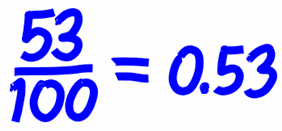

In our daily lives, we use fractions and decimals a lot. Like example, during lunch, your family might have ordered pizza and for everyone to get an equal slice, you cut it into 8 pieces etc. And after that you can easily tell your parents that you ate 1/8 of the entire pizza or more. And decimals are used too as your parents pay for the bill of the pizza you ordered.At the same time, you need to use your "skills" of math to calculate how much change you receive and etc.
You might want to change a new cardboard and you need to measure the length of it and when its not a perfect whole number, you use decimals or fractions in this situation! You might just be bored and decided to divide a random number given by your friends and when the answer is not a whole number, you get fractions and decimals.
You see, Fractions and Decimals are everywhere and you use them everyday in our daily basics and at the same time, you build up you brain power!!!
Eunice,Isabella (Yadi), Ming Hui
The Jeopardy Game (Factors & Multiples)
Try out your knowledge of Factors & Multiples with the Jeopardy Game.
Access the game via the following URL:
http://www.math-play.com/Factors-and-Multiples-Jeopardy/Factors-and-Multiples-Jeopardy.html
Access the game via the following URL:
http://www.math-play.com/Factors-and-Multiples-Jeopardy/Factors-and-Multiples-Jeopardy.html
Tuesday, 10 January 2012
Sunday, 8 January 2012
Lesson 1 (01) Mathematics & Me...
Discuss
(a) the success and joys that you have experienced in learning Mathematics.
(b) the challenges you have experienced with the subject; and how you think you could overcome these challenges this year?
(a) the success and joys that you have experienced in learning Mathematics.
(b) the challenges you have experienced with the subject; and how you think you could overcome these challenges this year?
Lesson 1 (02) My Mathematics Classroom
How would you envisage the Maths experience in SST is going to be like...
(a) In what way do you think learning would look like in our Maths classroom?
(b) How do we contribute to a conducive and encouraging learning environment?
(a) In what way do you think learning would look like in our Maths classroom?
(b) How do we contribute to a conducive and encouraging learning environment?
Lesson 1 (03) What would help US learn better?
What are some strategies that you find helpful to learn well?
e.g. strategies you used to learn in class, understand the subject well, prepare for assessments.
e.g. strategies you used to learn in class, understand the subject well, prepare for assessments.

Lesson 2: The Mathematics that I know
In Primary School, you have 'met' several broad Maths Topics:
Whole Numbers. Fractions. Decimals. Money, Measure and Mensuration. Data Analysis. Geometry. Percentage. Speed. Ratio. Algebra.
Each Maths topic is made up of several 'sub-topics'.
In groups of 2-3, you will work on an assigned topic to
(a) discuss the relevance of the topic to real world application.
(b) sing the sub-topics, illustrate with examples, how you could/have applied this 'knowledge'/ 'skill' in your daily encounter.
Submitting your discussion...
1. One member in the group will be submitting the discussion as a co-author of this blog.
2. You shall submit the group's discussion/finding in this blog
3. Title of the Post would be The "topic" that we know... (e.g. The "Algebra" that I know...)
4. Remember to include the names of your members in the posting.
5. Insert a label for your post, name it "introduction"
Preparation: 1st Maths Lesson
We will be meeting for the first time this week.
Please get ready the following:
Ensure that you have accepted the invitation to be the co-author
1 Maths File - ORANGE
You need NOT bring your textbook in the first lesson
Please get ready the following:
Welcome!
You have been invited as a co-author of the class MATHS blog.
Accept the invitation as we'll be actively using this blog for your learning.
If you have not received any email invitation, key in the email address that you registered with Blogger and you will receive an invitation soon.
In Facebook, look for the group "Mathematics in Real Life" and request to be a member of this group. This is where we will gain deeper insights how Mathematics have influence our daily lives and shape our thinking :)
Subscribe to:
Posts (Atom)